Laptop Rescue, Rig, and Decision Fatigue
Chris Gmyr (00:00)
Hey, welcome back to the slightly caffeinated podcast. I'm Chris Gmyr
TJ (00:03)
I'm TJ Miller.
Chris Gmyr (00:05)
Yo, T J. So what's new in your world this week?
TJ (00:08)
man, this week has been just shenanigans. I we we'll talk about it in
Chris Gmyr (00:14)
Yeah.
TJ (00:14)
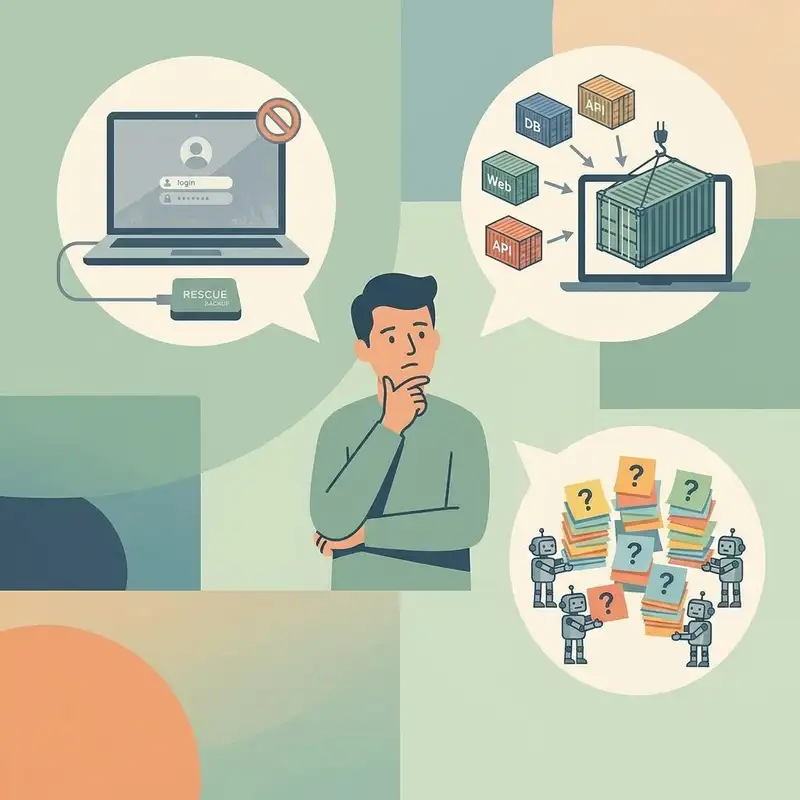
a minute, but like my computer decided to fry itself earlier this week and that was a total just ball of stress and so I was like dealing with that. you know, stuff at work's going great. you know, just
You know, kiddo's back at school, so we're still kind of like easing into that. It's been really nice having him like occupied during the day. I definitely like miss our interactions throughout the day, but he's like happy to be back at school. He's settling in really well. he's got a couple classes with some friends, which is really nice. so he's he's enjoying that. He's running for like so if you think about Harry Potter, how they had like the different houses.
They kind of have that concept at their school. they're the I believe their school mascot is like the knights, like knights in armor. And so they have like different houses associated with them. and my son is running for head of their house. And I guess those responsibilities are like helping ideate and plan spirit days and a couple other things, but
I'm proud of him for like going after a leadership position. And you know, I think that'll be a great experience for him if he does. so that could be cool. And yeah, so just kinda like settling into that big shift in life had yesterday had a a big post op I don't know if we've talked about my wife's surgery much, but like her her postoperative journey has been really smooth. Everything's gone really well.
we found out that her part of the reason why she got the surgery was we couldn't biopsy something. Well, we got the results back and it was essentially like precancerous stage zero. so like so validated in having the double mastectomy, you know, prophylactically. so and she had an appointment just like two days ago with the the cancer surgeon. She's seen the plastic surgeon.
we we've been doing that every week. but she just met with the the cancer surgeon and he was like, Yeah, the one side, like not only were your biopsy results like precancerous, like there was a lot of that going on that we didn't catch in scans. So, like, really good that we did this. so yeah, feeling
very good about that decision. And like now we don't have that cloud looming over our head moving forward. And like it's just a big thing we don't have to worry about, which will be really nice. yeah,
Chris Gmyr (02:39)
Yeah, yeah, that's great.
TJ (02:40)
other than that man, just like we'll talk a little bit more about this too. Like I'm kind of at I feel like I'm at a little bit of a tail end of little little mini burnout. so kind of just kind of recovering from that, kind of stepping back into things. I think I'm gonna kinda
lay off the gas for the next couple days and and hit it really hard on, you know, this coming Monday. I've got some goals that I'd like to achieve around that. So yeah, man, how about you?
Chris Gmyr (03:04)
Yeah. very similar, lots of like different projects going on. Trying to get my rig project at work released. so that is going out today for some like beta testers for a couple of small teams that have been waiting to use it, which have been just kinda like chopping in the bit to get at it.
TJ (03:23)
Yeah.
Chris Gmyr (03:24)
and I'm just trying to make it, you know, good enough with my teammates to get it out to people. So
it's a good experience for them. but that's been going really well and also building in some things to the package that gets installed, not only for the CLI, but also for like bug reporting and feedback. So just a a quick recap. Rig is a project that is able to spin up infrastructure and also like data seeding across multiple.
services, because we do microservices at work. And it's been a pain to work on something that's especially like cross service and getting that data available locally so that you can like smoke test things or now like having agents like look into stuff. so what Rig does is basically spin all that stuff up for you. It'll say like I'm working in repo A, I need B C and D. It'll go through and spin up and
Containerize all those applications into similar resources. So if two of those services are on Postgres, two of them are on Dynamo, you'll see like one container for Postgres that has two databases in it. and then the Dynamo instance through local stack will have like one dynamo instance and two tables in there. So it's
TJ (04:41)
Nice.
Chris Gmyr (04:42)
it's
simplifying the containers and images for docker so hopefully that's a performance improvement instead of spinning up completely different instances locally and then having to manage ports and so all that stuff rig manages ports and then the the bigger thing is how to see data across these things
TJ (05:04)
Mm-hmm.
Chris Gmyr (05:05)
so I want a provider with ID of you know one and then email at you know
Provider at test.com. So I want that to propagate into service two and three, but like four and five, you know, don't need that provider data. So this also takes into account what the data schemas are and the types of data stores that you have in these services and basically spreads all that data out and sees the data. So you can basically spin up these stories.
of like this feature or feature A, B versus you know, just like a happy path type of thing. and then everything is kind of done for you. So you like just wait like a couple minutes, this world spins up for you. And then you can smoke test, you can do any sorts of things, you can have Claude run it. but it's starting off as a CLI and then we wrapped all of the CLI in skills that's automatically simlinked to your global directory.
So you can basically call this anywhere. And then after like each of the skill runs, it'll basically figure out if there's like any sort of feedback that you need to give or like ran into like an issue or a bug or you know, any sort of friction or whatnot. and then it'll automatically post that to our GitHub like issues. because getting feedback from some of these like developer tools is really hard. No one wants the, you know.
post any, you know, issues publicly on Slack. you know, people are able to share these things like one on one, but it's just too many people to get like one on one. So like how can we get some of this feedback automatically and have enough information that we can actually utilize it for, you know, book fixes, new versions and and stuff like that. So I r
TJ (06:45)
Mm-hmm.
Chris Gmyr (06:45)
I've really like this pattern of building, you know, skills on top of skills to like aggregate and
push feedback or you know, get any sort of data back from these sessions, which we won't typically get, pre AI.
TJ (06:58)
Yeah, dude.
Chris Gmyr (06:59)
so yeah, that's pretty cool.
TJ (07:00)
That is really cool. That is such a huge, huge problem. And it's it's a it's a problem space that I've spent a lot of brain cycles thinking about, like between overhauling the dev environment at Curology or even just like hearing the problems that you're facing and like I just I have this.
My brain tends to like hyperfixate on like these type of developer problems. And so I've always just kind of thought about like how do you manage like microservices or just even service-oriented architecture. I don't care if you've got like just three monoliths that kind of work together, like it's just a really hard problem to solve. And I think this is a really great way of doing it. I think building in the service deduplication is so key because.
I mean, you're gonna be resource starved if you're spinning up like five Postgres servers, you know, for
Chris Gmyr (07:53)
Mm-hmm.
TJ (07:54)
all your different services. So that do dupe is super, super important. And yeah, man, the the wrapping these tools and skills I think is huge. yeah, and I I love the feedback flow too. Like I think this is great.
Chris Gmyr (08:07)
Thanks. Thanks. so super excited to launch that later today and see, you know, how people progress through it over the next couple of weeks. then outside of work, just doing like a handful of projects. We got to plan a couple big next ones coming up, which will be painful.
TJ (08:23)
Yeah.
Chris Gmyr (08:23)
But we'll, you know, get through it. and then just tinkering with a couple of the side projects as well. So
continuing to work through novelhood stuff, the book club app. got another like audio based one that I'm been tickering on. just waiting for like usage to reset, I feel like every couple
TJ (08:40)
Yeah.
Chris Gmyr (08:40)
days, between Codex and Claude. and then we'll see what drops on the thirteenth when Claude does whatever with their new limits in usage and and whatnot. So
I've really liked not having the five hour limit like with codecs. so
TJ (08:55)
Mm-hmm.
Chris Gmyr (08:57)
depending on what Claude does next week, you know, might bump up the the codecs and see what there is to see. But I've really liked using hive with Fable, like we've talked before, because it's
TJ (09:09)
Yep.
Chris Gmyr (09:10)
just so much better. Even on like a low and medium setting, it's so much better than Opus V. So
TJ (09:17)
Yeah, yeah. I I've like I said, we'll talk a little bit about the mini burnout. So I haven't I haven't been pushing super hard on any of the projects right now, but man, the journey with Halcyon Sync and and like it was so bad with Opus. And once I got Fable 5.1 running the show is the lead in Hive, and I think I was I was running it on high like
I I got really hard on it to like get work done, like actual like tangible work. And I think the the key phrase that I got was I think out of an Aaron Francis tweet was like, Y I need you to make sure that all the work you're doing is measurable and measured. And like then we started getting like very much more concrete results.
out of it instead of like it just churning on like constantly finding holes and things. But putting Fable 5.1 in charge was so key. and on the like the Codex front man, I'm really glad that you've been working on Codex integration for Hive because I I'm kind of holding my breath a little bit for the 13th to see what happens. But I think what I'm gonna do is move from the the $200
Claude plan to the hundred dollar Claude plan and then go from my $20 OpenAI to the $100 OpenAI and start to use them a little bit more interchangeably because yeah, I'm I'm exhausted with the Opus shenanigans and I don't know, I feel I feel like Astra maybe might be might be good in a a hive lead role as well. We'll have to see.
Chris Gmyr (10:50)
Yeah, lots of experimentation for sure. I haven't tried changing the lead too much besides between like Opus and Fable. but probably spin up like a another little side project just to test just like all codecs or codecs as the primary and then Claude as the secondary.
TJ (11:09)
Yeah.
Chris Gmyr (11:09)
just trying to go from there. So lots more experimentation, but I feel like
TJ (11:11)
Like yeah, like
we've we've talked about this offline too. my biggest holdout about going to codex is the loss of r rule files, like and and the globed matched rule, you know, that I feel like is so fundamentally like a key feature that
It's made me really hesitant about switching over to Codecs. Now, the interesting thing that I've I've I I've thought about, I have not looked into how feasible it actually is, is using open code instead of code, like using the the GPT models through open code and putting together an open code extension that brings in support for rule files. so I I I
From my very limited research, I think that would work because rule files are a harness thing, not a model thing. So if we can get that into open code as the runner, I think that would be pretty sick.
Chris Gmyr (12:14)
Yeah. Yeah. Totally. And I got some research to do, you know, with that as well. Cause I think at work we're going to start working ourselves away from Claude Code the harness because there's a lot of things that we like really like. It got us up to speed very easily and quickly. great documentation on it, but the some of the things that they've been putting in there and just the ways that we want to work don't always match up.
And it tends to be like a little heavier in some areas too. And because we have now an AI gateway through bedrock and we can have multiple models, there's some like hackery that we had to do to get some of those like non-anthropic models to work in cloud code. And if we had a like Rula engineering harness built on maybe Pi, maybe open code.
And we don't really have to worry about that as much. You just kind of build your your new harness and you know, port the rules over, port some better skill handling over, like do all the things that you need to do to get, you know, more of like a bare bones cloud code set up. But now you can build and extract and do more with like workflows and whatnot, you know, for everyone across the board.
TJ (13:26)
Yeah, the biggest holdout for me on on being able to do that is not being able to use your Claude account with like open code, you know. But because you're using bedrock, I think that puts you in a much different position. yeah. That's cool, man.
Chris Gmyr (13:41)
Yeah. So TPD on all the things.
TJ (13:44)
Yeah yeah.
Chris Gmyr (13:45)
yeah, to spend fun like cranking on projects and just tinkering with things and you know, messing
TJ (13:49)
Yeah.
Chris Gmyr (13:49)
with the different models and harnesses and and all that and yeah, put a couple more things into Hive the last couple days too. because I was seeing some workers get like really high on context and like no one no one was really like talking to each other. Like I would have to like when I was doing like my physical checks.
For like projects and workers, it's like, this one is way too high. Like, what's going on? so now there's a config value that you can put the context percentage in. And I have mine set for 60. So the worker now lets the lead know like what its current context amount is.
TJ (14:24)
Mm-hmm.
Chris Gmyr (14:25)
Lead can say, like, well, are you almost finished up? Like then we can go push past a little bit past 60 or whatever your threshold is.
or no, we can actually have like a lot of things to do. Like I'm gonna have you pause right there, save, save, commit everything, do like a log file, and then I'm gonna tear you down and bring up a new worker, fresh context and to pick up where you left off to keep
TJ (14:46)
Yeah.
Chris Gmyr (14:47)
that like general context like low for the workers.
TJ (14:50)
That's sick, man. that's real cool. I'll have to make sure I get up to date then. Yeah. Yeah.
Chris Gmyr (14:54)
Yes. But yeah, enough
of random projects and and whatnot.
TJ (15:00)
Ha ha ha.
Chris Gmyr (15:01)
Wanna continue on. So yeah, any any new coffee stuff this week for
TJ (15:05)
No man,
I'm still working my way through this Kirkland stuff. we I we normally order from Costco and get our stuff like delivered. because it's just always a pain to to go deal with it. And anytime I walk through Costco, I always end up buying stuff that I did not plan on, you know? It just always bites me. Yep.
Chris Gmyr (15:23)
Yep. That's their jam.
TJ (15:27)
So we ran out of dog food, so I had to go and
I can't r I don't know what brand it is, but we went by the coffee beans and we picked up some stuff that smelled really good. So I've got a grinder's worth to finish. Like I just refilled the hopper with the last of the Kirkland stuff, and then I get to try out this new stuff. I I
I don't know how it's gonna be, but it smelled really good. So I'll once I get that into the hopper and it into the bean, like get using it, I'll I'll get the details and share So I'm
Chris Gmyr (16:02)
Sweet.
TJ (16:03)
I'm curious about you. Did you get into this this honey stuff yet?
Chris Gmyr (16:07)
yeah, finished it up last week. So yeah, it was it was pretty good. I wouldn't say it was completely like world changing. but it was solid.
TJ (16:16)
Yeah.
Chris Gmyr (16:16)
but I don't know if it's worth the extra, you know, I don't know, ten bucks or whatever it is for bag.
TJ (16:20)
Yeah.
Chris Gmyr (16:21)
I would try it again 'cause sometimes, you know, you get like a like off batch or like even though like it smelled really good, like the taste wasn't really what I was,
TJ (16:28)
Sure.
Chris Gmyr (16:29)
you know, expecting. So might try it again in the next box, but gotta wait for, you know, the next
shipment or whatnot. So kind of back to my like usual bags that we have left over and you know, see see whatever's next. But yeah, we're
TJ (16:42)
Yeah.
Chris Gmyr (16:42)
the same for me.
TJ (16:44)
Yeah, nice, nice. Yeah, I was I was definitely on the edge of my seat waiting to hear how the the the honey process stuff went because I've that's something I've never had before. yeah.
Chris Gmyr (16:52)
Yeah. I'd definitely
try it out. I'll I've seen like a bunch more roasters trying it. but it is a little bit more like specialized and more,
TJ (17:00)
sure.
Chris Gmyr (17:01)
you know, expensive too. But yeah, it's definitely good if you get a good batch.
TJ (17:05)
Mm-hmm.
Chris Gmyr (17:06)
but yeah, let's pivot over to your very
TJ (17:09)
Yeah.
Chris Gmyr (17:10)
very crazy experience with your computer and get fry.
TJ (17:15)
What a nightmare. my gosh. I think this was like a Tuesday, right? I was just I sat down on my laptop. I had a I had like a therapy appointment coming up later in the day. And I I he had our therapist was giving us some homework and I was, of course, at the last minute, you know, doing the homework. So I was just I opened up bare notes like I do.
because halcyon's still in progress and I wanted the the sync is not quite there yet and I wanted the notes on my phone for the session. And so I'm like I open up bare and I start just typing and my computer freezes. Like completely locks up. I've and this happens occasionally like I especially with all the agentic work like
I I normally used to be really good about always restarting my computer every Monday, just start the week fresh, clean out any cruft, anything that's like I I don't know. I just I used to be in a really strict habit of that. But with having Claude running like all the time on my laptop, working on Halcyon stuff, like I haven't rebooted my computer in like weeks. And I was like, well, you know, whatever, like you just locked up. So I hold down the power button, like shuts it down, turns it back on.
get to the login screen, type in my password, locks up. Like, like, like the clock locks up, like it just completely freezes the machine. And I'm like, I I don't know. I like restart it again, does the same exact thing. And so I'm starting to panic a little bit because I don't have a big enough hard drive. because the new laptop I got has a two terabyte disk. I don't have a big enough external.
to handle time machine backups for it. Cause like it I actually had like fairly full disc. So I I'm like like panicking because I know I've got like abandoned work trees. I've got like in progress work trees for for Halcyon. I've got like some scenarios that was
in progress and I'm just like, no, like I gotta get my stuff off. So next thing I try was like boot into safe mode. Same thing. And like Claude and meanwhile I'm chatting with Claude, like trying to troubleshoot all of this. Like, what do I even do now? And it was like, like safe mode doesn't work like like this is Yeah.
Chris Gmyr (19:32)
Yeah, that's bad when safe mode doesn't even work.
TJ (19:34)
And so it's like all right well I went in I could get terminal access through like macOS recovery.
And so then through Mac OS Recovery, I like reinstall the OS. Same issue. so now I'm in like I can get terminal access, but I don't have it's like bare bones terminal. So I don't have things like rsync, I don't have git, I like I don't have these things, but at least I can like navigate through the file system through recovery terminal. but because I don't have any of those CLI tools, like,
really wasn't super useful to me to try to get all this stuff off. Like I was thinking at least if I could get into like Halcyon and like like push all the repos, but like I don't have Git. So Claude suggested that I share the disk with another Mac. So I grabbed my work machine, like shared the disk over, and then I was able to find like a hard drive that had like 200 gigs left on it.
it's one of my like random externals. And so through file sharing, I had Claude rip rip up some like put together some scripts to like back up what I thought was all of the essential stuff. Like I got my dot files pushed and backed up. I backed up like Prism, another project, like my GitHub triage project, all of Halcyon, all of Sonori.
And I thought that that was gonna be it. And so once I got all of that moved over and like verified, I also had it move over my macOS keychain because now that I'm developing native apps, like I have keys in my keychain that are important for signing things. so
I had it like back that up too, and then I just erase the disk, reinstalled Mac OS, and everything's fine. And I mean it's somewhere in there too. I like ran through all the diagnostic checks because I'm like, what did my RAM fry? Did my hard disk fry? Like, but all the hardware checks were coming back fine. So this is just like a huge mystery on like what actually happened. But the once I got everything like reinstalled, you know, luckily I use like dot bot with my dot files.
In that just like I run a script, it installs everything I had installed with Brew, installed a bunch of like Mac App Store stuff, downloaded Set App, got all that stuff installed. but the the tragedy that I realized after the fact was I didn't back up the Hive database or any of my clawed.
Chris Gmyr (22:03)
Yeah. It's all hidden in
there.
TJ (22:06)
Or any my claud chat history. Like if I would have been smart enough, I would have copied over the the dot claude directory for my home directory. So I have like all of my conversation history still, which would have been great. and I didn't back up the hive stuff, which means I only have whatever docs were in the Houseyon directory, but like I know for sure it wrote handoff docs that were in hive pads.
Like I was in the middle of some stuff with Sonari and like I I just I'm now I've lost all of that state. there are some things that got persisted to markdown files in the like planning stages, but it did write a bunch of this stuff to like pads that are now gone. so that really sucks. But coming from a blank disc,
to back up and running with like everything that I used on a day to day basis took me like forty five minutes. Like it was i quick recovery after the fact, but I'm I'm kind of
I'm kind of a little scared to get back into a work on Halcyon and scenarios right now because like I don't I don't know what I I don't know what I lost. At least I have all the work
Chris Gmyr (23:16)
Yeah.
TJ (23:18)
trees. Like, so I didn't lose any code, which is nice. I just lost all of the state that Claude had about three weeks of Halcyon work and a bunch of like in progress scenarios stuff. so kind of a bummer. but
I the the actual real critical stuff seems to have been able to move over and everything.
Chris Gmyr (23:42)
Yeah, yeah. Man, that's been a rough week for sure. And also just to get no answers from it of like what happened, or is like this gonna happen again in a couple of weeks or two years or or what? Yeah, just crazy.
TJ (23:57)
Yeah. Yeah. yeah.
Chris Gmyr (24:01)
yeah, I I I know we talked about this offline, but might as well mention it here. I gave up on Time Machine a long time ago. Like it was just taking up like too much dis
space even for like a large external drive. And just anytime that I needed something out of it, it was it just, I don't know. It was a little janky. so I've been using backplays and they're like off off site kind of backup, remote backup
TJ (24:23)
Yeah.
Chris Gmyr (24:24)
type of thing. And it's I have both computers, my wife's and mine, backed up to it. So for you know, two computers for two years and
And I don't know, 30 or 60 day like retention for like revisions and things like that. It's a little expensive, like four or five hundred dollars, I think, like every two years. but it's just a fantastic piece of software and it just like backs up so quickly. And I don't know. I've just anytime that I wanted a file recovered or to check on something, it's always been there, like no issues, no problems.
And even for like the hive database and cloud sessions and stuff like that, it's all it's all in there. I basically just exclude you know like maybe some Docker stuff and whatever that can be rebuilt anyways. That's just too big for a backup.
TJ (25:12)
Mm-hmm.
Chris Gmyr (25:13)
But I don't know, just set it and forget it, it just works. It's off site, so you know, got forbid something happened to your house or you know, w who knows what? Like at least that's just in their hands and back.
TJ (25:26)
Yeah. I
Chris Gmyr (25:28)
Great.
TJ (25:29)
you had recommended to me that to me like years ago and I did use it for a little while. I think I was paying like 30 bucks a month or something. So it wasn't cheap. but that was the other big piece to that is that it's off site. Like I've talked about for years like building a big NAS and like that would be great to like back up to that. But yeah, like God forbid something happens to my house, like
I've had plenty of floods here. Like who God forbid a fire happens and I actually need to like recover stuff, you know? So I'm I'm considering getting back on that. back on that now. And yeah, I'm like, I'm I hope it wasn't anything hardware related, but like I I don't know, man. It was that was just such a crazy experience with like absolutely like
Thank God for Claude helping me troubleshoot stuff. And like I didn't even know I could share the disk between two computers like that. and that that saved the day.
Chris Gmyr (26:21)
Yeah. Yes. Thank you, LLMs.
TJ (26:24)
Yes.
Chris Gmyr (26:26)
Yeah, it's just like amazing, like the stuff that we can do now. Like even some of these like side projects, I'm like I the hours and days and weeks that I would have to sit here and figure this out, like I would have given up and just done something else or like a different project, or just like up this idea is too hard. Like I'm not I'm not gonna waste my extra time and brain power, you know, on it. Now I can just have the idea in the general direction of where I want to go and like it just takes it and then I
I test and do what I need to do with it and it's just been amazing.
TJ (26:58)
Mm-hmm. Yeah. And that's I mean, I I plugged the disk into my work computer and fired up Claude and said, here these are the things I need to back up. And it like I wrote a script that like tarred them and copied them and validated them and like did the whole thing for me and like left handoff so that I could get back on my computer and then point Claude at it to like restore all of the stuff. And so it that once we got to the that phase, everything went really smooth.
but the the troubleshooting was so stressful. I'm like, did I just lose everything? Like, my god.
Chris Gmyr (27:35)
Yeah, yeah, totally. you mentioned dot files in there. I know we talked about dot files a long time ago, kind of beginning of the podcast, but
TJ (27:43)
Yeah.
Chris Gmyr (27:44)
something that I still haven't set up because I haven't found like a great I don't know option for that. Maybe there's like better options now. But with the two computers, I want generally very similar things, but not always the same. So it needs, you know, some bit of
configurability or like I just need to push my personal stuff to like a Git repo and then just pull it down like manually or just copy and paste or you know download a folder or file or something like that on the Word computer and adjust it. But yeah, it just feels like there's stuff all over the place in dot file world that
TJ (28:22)
Yeah.
Chris Gmyr (28:22)
is like, I don't know. I don't want to deal with it. Like it's all backed up through Backblaze, which is fine, but like I don't want to deal with that on like a a work
Laptop, like I just wanna bring stuff down and copy and paste things.
TJ (28:32)
Yeah,
I I keep my environments between my work computer and my personal computer very similar. So like the only thing that's different is like I don't install stuff through the Mac App Store on my work machine. so that's the only difference between the two machines is like it just doesn't install that stuff at all. But all of it is run by dot bot and homebrew and it's in a repo and I have it on GitHub and yeah, that's that's works
Chris Gmyr (28:56)
Nice. Okay.
TJ (28:56)
solid for for a long time.
Chris Gmyr (28:59)
Cool. He'll have to add me to the repo. I'll check it out. Cool.
TJ (29:02)
Yeah, for sure. I've been meaning
to open source it for years, but like I also don't know, I also haven't spent the time to like dig through it and make sure there's no secrets in there. which I should actually just point Claude at and be like, hey, make sure this is like sanitized of things. I use charm bracelets skate, skate. I use that to keep secrets out of scripts. so it's like an encrypted local database CLI for like storing key value secrets.
and so you can just reference those inside of your scripts and it will pull from that, you know, encrypted database and inject them at like script time so that you're not committing secrets.
Chris Gmyr (29:42)
Nice. Can you does that also work with like Claude calling things or like APIs or whatever? Nice.
TJ (29:48)
Mm-hmm. Yeah, it knows how to use the CLI.
Chris Gmyr (29:52)
Cause I am so tired of being like, Claude, you know, brought in this pat or this token or that token. It's like it's it's just the test one. Like don't worry about it or like stop asking me, like you've pulled this thing in in the last five conversations and you keep on like warning me about it. Like I don't care, just move on. So if yeah, if there's something else like that.
that I can plug into. And I I vaguely remember you talking about it when we were
TJ (30:16)
Yeah,
it's a fun little library. It's it's worked really well. I like it a lot.
Chris Gmyr (30:20)
Yeah, I'll have to check that out too. yeah, moving on to something
TJ (30:22)
Yeah.
Chris Gmyr (30:25)
a little bit more fun and maybe happy. Talked about
TJ (30:28)
Yeah.
Chris Gmyr (30:30)
twenty twenty seven conferences.
TJ (30:32)
yeah, so this past year I there were conferences I wanted to go to that I didn't go to, mostly mental health related. I just couldn't I I just couldn't get to them. but I wanna do talks again this year, like really bad.
I missed doing them this year. I it's just something I'm super passionate about. I love teaching, I love sharing, I love helping other people learn things. And I know that there's stuff in my brain that people would like to hear about. so I'm I'm for sure submitting to PHP Tech. whether I get selected or not, there's a very high likelihood that I'll be at the conference no matter what. I I love what they're doing. It's a it's one of my favorite conferences, so
I'll be for sure applying for PHP Tech. I don't know if I'm going to apply to speak at Laracon US or not. I will I will definitely be at Laracon US. I've got a couple ideas that are probably worth submitting. and I'm a hundred percent really, really focused on Laracon Australia this year. that is like if I don't do anything.
I really want to speak at Laracon Australia this year. so yeah, yeah. I I don't think there's any way I can get to the conference without being a speaker. so I really hope that that works out. That's my big focus for the year. But yeah, I I I want to hit those conferences. and I'd I'd love to speak at speak at all of them if I could. so we'll see. but yeah, I'm I'm
back at it, you know, and and you know it's I I'm open to other other conferences as well. I mean those are just the ones that I'm planning on so far. but I
I'm really passionate about getting back to it and and getting out of my own way this year and and doing it. So I think I I did solicit some ideas, solicit four ideas on socials. I haven't no one's commented back on them. So I've got it it kind of seems like broadly people want actually like non-AI talks. People have kind of I've I've gotten like
people's preferences on like maybe not AI talks, but I think getting away from implementation and talking more about like at Luma, I've built some really big AI features. And I think that there's a lot to be shared about building durable AI solutions and like building AI systems and like building them in a sustainable way that like accounts for rate limits, accounts for overloads and like outages.
graceful fallbacks and like it's all kind of standard ish application stuff, but like there is like I've definitely found like things to do with building durable AI systems. and I think there's just going to be more and more of that moving forward. so yeah in the in the age of like people building with AI, it's it's definitely been interesting to think about like what am I going to talk about? that's
That's relevant and interesting to individuals instead of like, like, I want to give a technical talk. Like, who am I talking to? Like agents? Like, I I don't know. Like I it's so I I feel like taking a step back and talking about strategies. So like strategies for building durable AI systems or strategies for how to successfully develop things with agents, like talking about like
the journey of building Sonari or Halcyon or, you know, other other things or or doing case studies on things that I've built at Luma. and so maybe staying a little out of the nitty gritty and just more talking about like approach and strategy to to doing those things, I think that could be valuable for folks.
Chris Gmyr (34:07)
Yeah. Yeah. I think that's huge. And it's AI adjacent, but it's more just like newer versions of architecture and development, you know, in
TJ (34:18)
Mm-hmm.
Chris Gmyr (34:18)
the world. It's less about the actual AI piece of it. so yeah, I think that'd be awesome set of talks.
TJ (34:26)
Yeah, yeah. So I'm definitely like if people have ideas, please, please send them to me. I I really I I want to deliver value, right? There's a lot of things I'm passionate about. There's a lot of things I could talk about, but like I want I want to make sure it's valuable and interesting to people.
Chris Gmyr (34:45)
Yeah, yeah, a hundred percent. And all of your talks in the past have been fantastic. So I think whatever you come up with and present out there is gonna be fantastic, so
TJ (34:55)
No, thanks.
Chris Gmyr (34:56)
Yeah, no problem.
TJ (34:57)
Yeah, man. I think we got a couple minutes. I'd like to touch on this a little bit. and I don't know how much you're feeling this as well. Like we've both been building a lot. Like I've been building Halcyon, I've been building Scenari and like all of the adjacent things of like websites and newsletters and email capture and iOS apps and all sorts of other things and like and building at Luma and you know it's
I I kind of burnt myself out a little bit, pushing on. I I don't even know if it's like pushing on any one thing. I think it's pushing on so many things at once. I'm definitely dealing with a little bit of burnout and I'm trying to catch myself early and recover. So I've like I've taken kind of the last week off of of really doing much of anything.
But I I'm trying to push to have Sonori launched in two weeks, which means I need to have beta users testing next week. so I'm I'm getting back to pushing on that. But you know, I I still haven't gotten around to Prism. I really, really want to. I'm starting to work with Iris on trying to figure out how to.
time block things in my calendar in a sustainable way that I can still kind of pick away at a little bit of everything and have time for my family and have like downtime to like not burn myself out again. but yeah, just it doing I've I pushed hard on everything all at once and
I talked about coming back from Laracon in a sustainable way. I definitely didn't do that. And so I've I've had to take a step back and like kind of reapproach all of it again.
Chris Gmyr (36:43)
Yeah, yeah, a hundred percent. And definitely feeling that with like multiple, you know, side projects now and like all the stuff that I'm doing at work. It just feels like just interacting with a terminal all day,
TJ (36:55)
Yeah.
Chris Gmyr (36:56)
you know, every day. and then maybe get some sleep. So that's been tough. And then on the personal projects too, it's like I've been also hitting the caps on usage and not wanting to, you know, upgrade or, you know, setting
TJ (37:09)
Same.
Chris Gmyr (37:09)
up multiple accounts. It's like, well
I, you know, not only burnt out myself, but I'm burning out my usage as
TJ (37:18)
Yep.
Chris Gmyr (37:18)
well and can't do anything. And it's like, okay, well, maybe should I just like focus on one project to get it, you know, to a sustainable level and then I can refocus on, you know, others. but I don't know, it it's tough. Like I want to work on like all the things at once and AI just gives you this false sense of superpowers. But then the mental side of it, keeping all this stuff in
in your mind, definitely takes its toll after, you know, a couple of days or a couple of weeks and it's just a lot.
TJ (37:44)
I think part of it is maybe l you know, the burnout used to be about code and context switching. Like context switching is still a problem. But what I'm feel like I'm running into almost more now with agents is I'm running into like decision fatigue. Like because I'm I'm still trying to own a lot of the decision-making process of like
Broad stroke architectural patterns. I care about those. So I'm like making decisions about certain things there. But you know, there's a lot of taste involved. And so I'm making a lot of taste decisions, certain design and like user interaction decisions and overall project like trajectory and like what the actual end goal and end state is that I have in mind, like the creative decisions.
I so I feel like almost like the decision fatigue is more like the agents are working and they come back and I'm just like, I gotta like make d now I gotta make more decisions, you know.
Chris Gmyr (38:43)
Yeah.
TJ (38:44)
Yeah, I think I think that's a little bit more of it now.
Chris Gmyr (38:48)
Yeah, and I've been trying to do I don't know, a little bit of shifting in Hive and especially like personal projects of like, hey, you asked me a bunch of things, and it seems like you can handle four out of the five of these things on your own. It's like look at this in playwright or Chrome. Like you have these tools available to you. Like look it up, do the visual test yourself.
And then if you're still unsure, then ping me. But it's like all this like piddly stuff.
TJ (39:19)
Mm-hmm.
Chris Gmyr (39:19)
Just handle it yourself and only bring these things to me if you actually need like my buy-in or actual decisions or like a human eye on it. And then I can, you know, feel free to, you know, do that. but it's taken a little bit of tweaking and comparison to some of these issues of like, yes, always notify me about this bucket of
tasks or questions, but just
TJ (39:44)
Mm-hmm.
Chris Gmyr (39:44)
handle it yourself in these other three buckets of things that you can you can do. And sometimes it just needs that nudge or like the memories or documentation on like what it can and can't do. and maybe just adjusting the instructions or like in hive like the run book or the the worker and setting those like responsibilities and expectations with the agents and hopefully it'll tone it down a little bit more.
TJ (40:10)
Yeah, I'm I'm trying to find not only where that line is, but I'm trying to figure out like where I'm comfortable with those lines, like
Yeah.
Yeah, it's tricky. It's it's tricky. And that and that's what I'm trying to do too is like de figure out where those lines are and then define them in a way that like yeah, it's it's surfacing the stuff that I really need to see instead of just like, here's all the decisions. Like Yeah.
Chris Gmyr (40:36)
Yep. Yep.
Exactly. Then I've like continued to I haven't really done much with it yet, unfortunately, but it's something that's always kind of top of mind is getting out of like the text space world into more of a visual world. And it's like, hey, instead of trying to explain what you're trying to do here and ask me for like insight or advice or answer questions, it's like build me a flow chart or build me a doctor
TJ (41:02)
Mm-hmm.
Chris Gmyr (41:04)
or like architecture.
flow whatever. or I've been really trying to leverage like Claude artifacts and I can
TJ (41:12)
Yes.
Chris Gmyr (41:13)
go on there and like comment and zoom in and like give immediate feedback on like visual and design based things. So like just getting out of the the text-based world into some more like visuals and leveraging some of these other tools that weren't as available before has been super helpful. So it kind of
Helps break up just the the text like code only sites.
TJ (41:37)
A hundred percent just
too much pros, too much pros. Like I I need visuals and charts and yeah, I'm I'm a very visual person anyways. So like yes, give me something like visual spatial that I can like sift through. Yeah. Yeah.
Chris Gmyr (41:50)
Yeah. Yeah. Totally.
TJ (41:51)
Well on that note, man, you wanna wrap up?
Chris Gmyr (41:53)
Yeah, let's wrap it up. Thanks for listening to the Slightly Caffeinated podcast. Show notes and all the links and social channels are down below and also available at Slightly Caffeinated dot Fm. If you have any questions for us or have a content suggestion, go to Ask a Question page on our site and we'll feature it in an upcoming episode. Thank you all for listening and we'll catch you next week.
TJ (42:13)
See ya.
Creators and Guests