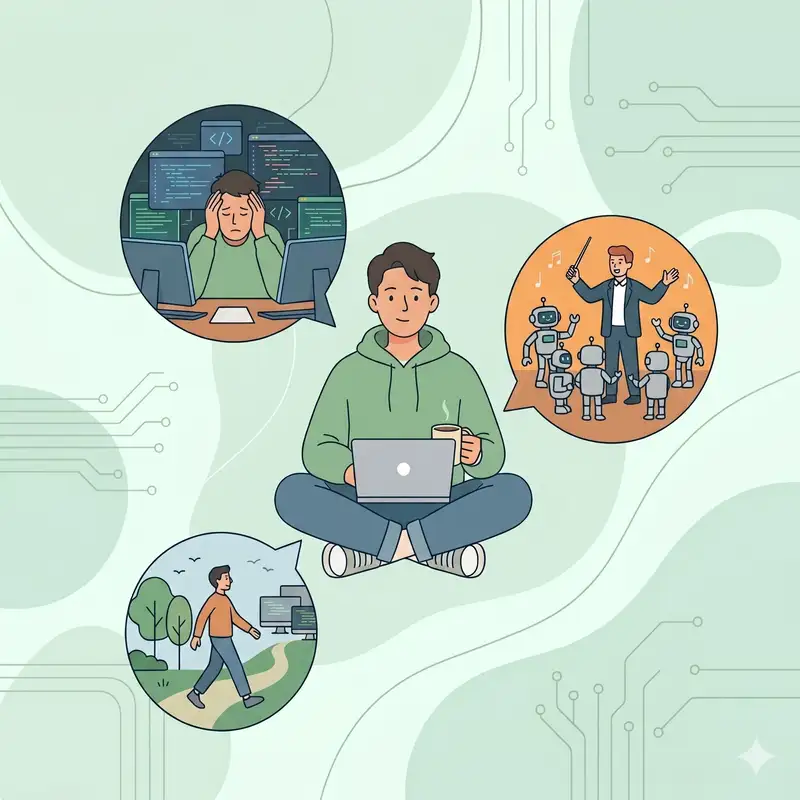
New Grinder, Solo, and AI Burnout
Chris Gmyr (00:00)
Hey, welcome back to the Slightly Caffeinated Podcast. I'm Chris Gmyr
TJ MIller (00:03)
And I'm TJ Miller.
Chris Gmyr (00:05)
So T J, what's new in your world this week?
TJ MIller (00:07)
⁓
man, well
I feel like it's I've just been super boring. ⁓ I got some tattoo work done, which I'm super stoked about. ⁓ my right arm has had this like three-quarter-ish sleeve of these like zombies. It was never really, I don't know, at the time.
I I was in my like early twenties, late teens when I got it. And it was just at the time I I we I dug it, but like as I got older, it just never really fit or like sat well with me. So I've been always wanting to cover it up. and finally like found an artist that was into it. And this is like back in like Thanksgiving when I like booked him because he had a Black Friday sale.
So it was like, you know, you book, pay your deposit, you book now, and you get locked into this low rate. so I set it up then and it took all the way until June to get actually get in with him. and so we started in on it. And boy did I forget how much tattoos hurt.
Chris Gmyr (01:04)
But it's so good. Like once you get into
it or like the day after, it's like, ⁓ let's do some more.
TJ MIller (01:09)
Yeah. No, this this one was rough because it was a ⁓ like five and a half hour session and we covered geez, I'd say like probably the first pass on the lower like my forearm. the so about half half coverage, which was pretty nuts. He works he gets a lot done for the time, but like, man, was I getting like tapped out towards the end there. So
Chris Gmyr (01:31)
Yeah. Yeah.
He he got a good chunk of the way through the design. It's looking good so far.
TJ MIller (01:37)
Yeah,
I'm super stoked about it. So got got that ball rolling. And then the funny thing was my wife was scheduled like two days later for her session on her sleeve cover-up. So that was pretty funny. And then ⁓ my extended family's huge and so we do these like big annual parties where everyone gets together and like my family collects
like antique tractors. It's kind of weird. They collect and restore these antique tractors. He's got probably like forty or fifty of them. It's crazy.
⁓ so Andy's got a bunch of muscle cars. So he gets them all out of the barns and like puts them all out on display. And then is as long as they're running, you're welcome to like go out and drive them. She's got like a couple acres, so you go take the tractors out for a drive, or you can you're out on the dirt roads, you can take any of the muscle cars out. And so I got to drive some of my favorite muscle cars, which was just an absolute riot. So did that.
Yeah, other than that, it's just been like knocking out projects around the house. I've been 3D printing a lot lately. I've been printing a lot of shelf brackets and making lots of shelves for around the house. ⁓ yeah, so that's been that's been cool to kind of like get new stuff on display and redecorate a little bit. and then I'm I'm about to go now that my like my back's healed up, I'm gonna go
Chris Gmyr (02:46)
Nice.
TJ MIller (02:59)
try to finish some of the landscaping. So lots of lots of just choring around the house and then being exhausted from all of that.
Chris Gmyr (03:06)
Yep. Totally. Hear you there.
TJ MIller (03:09)
Yep. Yeah. So how about you, man? What's new in your world?
Chris Gmyr (03:12)
Yeah, just crank in at work. getting a lot done for ⁓ I mentioned rig, so like the infrastructure, like local tooling ⁓ testing setup that I talked about a couple of weeks back. So just cranking in on that. just feels like whack-a-mole for so many things. It's like up plug this hole and then two more things come up, you know, with more testing. But it's going really well. ⁓ just busy trying to go we started doing like weekly demos.
on Thursday. So there's like a little bit of a push to get something like in a demoable state each week. So that's like good for progress, but it also kind of gives me a little bit more stress on a weekly basis to be like, okay, well, there's a lot of stuff going behind the scenes, but the front of it, like you can't really see anything that's different or happening. so you know, finding something that's
TJ MIller (03:44)
Yeah.
Sure.
Chris Gmyr (04:03)
demo bowl or some of the other like AI related things that I'm, you know, working on, you know, is always a good thing to to show. but yeah, going, going really well so far. And hopefully trying to get it out before I go out for vacation at the end of next week. So we'll see if we can get like at least the repo spun up with dependencies. so we'll kind of go from there. And yeah, similar to you have just some travel coming up, school's out.
TJ MIller (04:20)
Yeah.
Chris Gmyr (04:29)
Today, so into the summer season, ⁓ we're going to Virginia this weekend for a graduation party. And then at the end of next week, we're going to New York for two weeks, to visit family up there. so in the meantime, trying to do stuff around the house, getting it ready for, you know, being gone for a couple of weeks. and then yeah, just getting into the the summer season and like all that. So been kinda busy on both sides of the spectrum, work and and personal. So
TJ MIller (04:30)
Mm-hmm.
Yeah. Yeah, man. That's dang. Yep. Yeah. Summer just kicked off over here too. ⁓ last week was the little homie's first week out of school and he had baseball camp this week. So yeah, kicking kicking things off, man. It's it's it's so nice to have him home. but yeah, it's
Chris Gmyr (05:11)
Nice. Yeah.
TJ MIller (05:19)
It's it's a lot. A lot extra to manage, you know? Thinking about making sure he's got lunch and like that he's got stuff going on, things to do and yeah.
Chris Gmyr (05:22)
Yep. Yep.
Yeah. It's a lot, but he'll have a good time.
TJ MIller (05:33)
Yeah, it's super nice having him home and like being able to like yeah, go do something with him in the middle of the day for lunch or, you know, it's it's really nice to have him like getting to spend time with him after yeah, like basically not seeing him all school year between all his clubs and everything. So
Chris Gmyr (05:46)
Yep.
Yeah, for sure. Yeah, the kids are busy nowadays, not home playing outside in the yard or anything.
TJ MIller (05:54)
Yeah. Hey, I have to say I
really appreciate where he's at right now because he's striking a pretty healthy balance between like video games and like being feral, like we were like growing up, where it's just like, yeah, you got your phone, fine, stay in the neighborhood, see ya. And he'll like go play at the creek. He'll like we're i inside the neighborhood was his elementary school. So he'll go over and like play ⁓ play in the playground, or he'll take his rollerblades out and go like skate around the school.
So it's it's nice to see that he's got like a pretty healthy balance with with, you know, not being glued to the T V and or a switch the whole time, you know.
Chris Gmyr (06:31)
Yeah, yeah, totally. That's really nice.
TJ MIller (06:34)
So cool dude. coffee wise, my grinder died on me. Yeah. This was it was not cool, man. I was just like it was grinding and all of a sudden it just got like slower and slower and slower and then dead. And I'm like, well, it's I guess it's time.
Chris Gmyr (06:39)
⁓ no. That's no good.
Yeah.
TJ MIller (06:54)
And so I I would just I was busy with something and so I'm like I just asked my wife to order one and it took a couple of days to get here. So like that really sucked. Like having to like wake up and then go run out somewhere to get coffee. I guess I could have made other things, but no, I couldn't have made anything. I don't have any ground coffee. So yeah, I just like sucked it up for a couple of days, woke up, went to Starbucks, you know, until the grinder got here. but the new grinder is crazy. It's so quiet.
Love it. an ar Aroma Master, I think it is. Yeah. Pretty, pretty solid. It's super quiet. I like that I was I'm able to like dial it in enough to like the perfect spot where I can just like turn it on and it'll grind the right amount of coffee that I can just like take the canister, dump it straight into the French press. I don't have to like
Chris Gmyr (07:22)
You guys got?
TJ MIller (07:44)
do certain amount of scoops or anything. It just like you can set the setting to like get the right amount of coffee, which is great. ⁓ super, super convenient. but it's like three times quieter than our last grinder, which is crazy.
Chris Gmyr (07:51)
Mm-hmm.
nice. That's awesome.
Yeah. All of our grinders have been pretty loud. So anything to tamper that would be ideal for sure. That's cool. looking at it right now. Yeah, grinders when they go out is is no good. Sometimes they give you a little sign, but besides that they just die and then you know you're just out of it.
TJ MIller (08:05)
Yeah, I couldn't believe it.
Yeah.
Yeah, no, it was just going strong and then it wasn't. I mean, I don't know. to be fair, I think I've had that for
Chris Gmyr (08:23)
Yeah. Yeah.
TJ MIller (08:28)
Five, six years probably. So yeah, I mean I got I got my money's worth out of it for sure. I'm not I'm not mad about it. You know, it gets used every day and even more during the summer when I'm like grinding up like big batches to do like big cold brews. so
Chris Gmyr (08:31)
That's a good run.
Yeah.
Yep. My old one was the Brata Encore, which is a go to for so many people. And that lasted eight years. Almo almost to the day. I'm looking at my ⁓ Amazon transactions. The orders were like almost to the day. one was like April eleventh was the original one, and the the second one was April sixteenth. ⁓ eight year difference. So yeah.
TJ MIller (09:00)
That's crazy.
wow, that's wild.
Chris Gmyr (09:13)
⁓ so yeah, pretty good ⁓ eight year run ⁓ for that too. And then I went with the Baraza Virtuoso Plus, which is pretty good. ⁓ I don't I don't love the timer. I l I liked the encore like the single dose of like you just measure out the beans first and then you dump it in there. It grinds the whole thing, you turn it off, and then you're good to go. The timer, like it's I don't know.
I I can definitely like dial it in more like per bag of beans that we have, but I don't know, that's such a pain in the butt to do for like every bag. ⁓ so like the timing for me, like I don't know, it hasn't been bad, but I don't know, there's just days that, you know, it puts a little bit more or a little bit less, or like if you do a full pot, like there's a bigger variance with that, ⁓ just based on time. And I don't know, like I don't like
TJ MIller (10:01)
Mm-hmm.
Chris Gmyr (10:04)
⁓ weigh it after the fact or like adjust more or less like out of it is like, well, it's done. I'm just gonna use this. And like it's I mean, it's fine. Like I'm not, you know, doing any sort of like crazy like competitions or anything like that. But I don't know. The next one is definitely gonna be a non timer, just like a a single dose one where I like weigh out the beans first and then just drop it in there and grind all the beans that are in there. And then, you know, get a little bit better consistency.
TJ MIller (10:10)
Yep, that's yeah.
Yeah.
Chris Gmyr (10:33)
You know, with that, but for now it's fine.
TJ MIller (10:35)
Yeah, this one's got a timer. So it's I mean, it's been fine so far. And like I don't really vary how much I'm making. Like I'm either making a French press or I'm not. So it like it it's fair it's easy enough for me to kind of like dial it in to be good enough for that. So
Chris Gmyr (10:50)
Yep. Yeah. We have our two settings for like the half pot or a full pot of the the drip. and then I can mess around with it a little bit if I wanna do like a chemics or, you know, aero press or something. I really like the the grind on it. ⁓ it's really great for a wide range of sizes, but yeah, just don't love the timer. Just I don't know.
TJ MIller (11:11)
Yeah.
I don't know, man. I definitely took a step back and started like considering do I get like an all-in-one machine that like does drip and does the grinding and all of that, like all in one. That would be like super nice to like, you know, wake up to coffee. Like that'd be sick instead of having to wake up and then go through all the like French press stuff while also trying to let the dogs out. And you know. But I don't know, there is
Chris Gmyr (11:29)
Mm-hmm.
Yeah.
TJ MIller (11:40)
There is something nice to the ritual of make making a French press though too, so
Chris Gmyr (11:44)
Yeah. Allows you to like slow down, kinda like think about what you're doing in the fast paced world of what we are living in right now.
TJ MIller (11:48)
Mm-hmm.
⁓ Dude,
it is crazy out here, man. I'll tell you. I don't know. Too fast paced for me, man.
Chris Gmyr (12:01)
Yeah. So enjoy enjoy the coffee time.
TJ MIller (12:04)
Yeah, yeah, for sure,
for sure. Cool man. so I heard you're trying some new stuff.
Chris Gmyr (12:11)
Yeah, trying some new stuff out. decided to give Aaron Francis's solo term a try. I did the free like it's a pretty decent, like free offering. I think you can have like three or four projects, whole bunch of different tasks with it. And ⁓ you can use it for free basically forever, or you can pay for unlimited. ⁓ I think it's like $99 for the first year, $69 for annual review.
renewal after that. And it's been super solid and really great so far. and what I like about it is that you can use it basically as like an all in one window for like all of your projects, all your sessions. basically like the simplest, you know, setup that you can. It's basically like what I would do in iTerm or something like that. Just have a bunch of tabs open. but then you can use it as like a orchestrator.
as well. So if you turn these features on, it comes with a bunch of skills and like a built-in MCP server. and it also has ⁓ I think like a CLI and ⁓ HTTP API that you can call it. So if you want to program programmatically interact with it outside of Solo you can do that too. But at least like inside it's all preconfigured with Solo's MCP and all your sessions
in a specific project can talk to each other. So you can spin up a like main like orchestrator agent and you can say like, hey, I'm gonna work on these two tickets next. And then you have like I wrote up a runbook or basically like an instruction set for them to follow for like hey you're gonna get this ticket, you're gonna spin up a work tree, you're gonna do XYZ steps, and then I'll take it from there.
So now I can say to the main orchestrator, like, hey, we're gonna work on ticket one and ticket two. And then it'll say, okay, it'll pull the information down, it'll spin up these two agents in the same solo project, and then give them specific instructions on how I want them to kick off the session with them. So it'll do some exploratory work, it'll write up a plan, it'll do all this other stuff, and then it'll basically like ping me and be like, this is done for your review. and then
I can have those sessions like talk to each other. The main orchestrator agent can check in on those processes and actually like look into those sessions. So if I'm working on something that might have like a merge conflict or working on similar files, I can go back to the orchestrator agent and say, like, hey, session A is asking me about, you know, this file or something like that. And
session B is asking me about the same file in a slightly different direction. I can say to the orchestrator, pick a route that or let's talk about a route and pick a route that like both of these agents can then work in parallel together and meet basically at the same spot. So having that ability has just been a total unlock because the main orchestrator stays pretty light context wise.
TJ MIller (15:02)
Yeah.
Chris Gmyr (15:12)
But can then reach out and do whatever it needs to do within those kind of sub sessions with the work that they're doing. So it's just been like amazing to see all these things like work with each other and give me a little bit more time to think about like the next thing or like dive into a specific session that like I need to take a little bit more control over or like review or whatever. So it's been like super cool to tinker around with and
I've only been using like the fully like paid ⁓ version for about a week or so. So still kinda get my feet under me. But trying to work on that general like run book and ⁓ instruction set for like all these different workflows that I have. So it's just been like super cool to tinker with and kind of step up into this new like ⁓ agenc workflow.
TJ MIller (16:01)
Yeah, I like I really like the pricing. ⁓ because really you can do everything in the free version. You just get unlimited of it in the pro version. ⁓ on top of that, like support and whatever. But like that's awesome to actually be able to give it like a real full shake. ⁓ this is something that I've I've been thinking about I've been thinking about picking up and and giving solo term a a shot. ⁓
I've just I've got I I've been really wanting to get back into like Prism and like pick up some work there, but I am absolutely buried. So I'm I'm definitely looking for something to like get a little bit better help with. And it sounds like that workflow would be great too, of like giving setting up an orchestrator agent. Like and the cool thing I I love about the orchestrator agent pattern is that you can make the lightweight context orchestrator be like Opus.
And then all of your agents be Sonnet, you know? And at that point, like so you're now like optimizing, like you want the really high effort, high thinking and powerful model like in front of everything. And then being able to delegate that work out to like sonnet with like a lower, maybe a little bit lower effort, you know, or or like thinking enabled. So I think that would work out really well for me to like power through like tickets and PRs and stuff is like
Chris Gmyr (17:16)
Yeah.
TJ MIller (17:23)
Get an orchestrator agent to like pawn off a bunch of that work of like, yeah, like look at all these PRs, like analyze them, where what do they need, you know, raise raise things back up to me of like questions for stuff. So yeah, it would it'd be cool to get pretty organized. I mean, I I I stay fairly organized with like Tmux and everything, but it would be nice to kind of have all that in one spot and the agentic like orchestrator pattern sounds really what I've been like looking for. So it's cool that.
You know, solo term accounts for that.
Chris Gmyr (17:52)
Yeah. Yeah. And then you can also have routines. So ⁓ I have like a morning triage routine that I just say like, good morning, let's triage. ⁓ and what that will do is I have it had it kind of pre-programmed for ⁓ each of the projects to go out and see if there's any reviews that I'm tagged on that are from an actual human, not like a dependabot type of thing. because those I don't need like a full review or anything like that with.
TJ MIller (18:03)
Yeah.
Yeah.
Chris Gmyr (18:21)
⁓ so it'll say like, hey, this PR is good for you to review. and then depending on the size or what I want to do with it, I'll either review it if it's a small one in the the GitHub UI, or I'll actually pull it down into a work tree via solo and run our ⁓ PR review skill and then I'll manually go through it once that's ready. ⁓ so it does that like automatically, like on triage, and then it asks me, like, what do I what do I want to do today? Or do you want to continue the
Two tickets that you were finishing off yesterday, because it keeps a a list of kind of like your own little Kanban board and open to do so of like, hey, you're working on ticket A and B. this one's like half done, this one is just ready for you to create a PR or something like that. So it keeps all that state in the same project and the orchestrator knows all about that. So it can say like, hey, I'll like resume your sessions and you can pick up where you left off tomorrow, and here you go.
TJ MIller (19:08)
Yeah.
Chris Gmyr (19:13)
you know, and just hands it off in a nice little package. So I think you could definitely set that up for you know, IRS in prison. and just say like every morning, you know, review like new PRs. Are is it something that needs work? Is it something that like I need to review or something that's beneficial? Are there a bunch of upvotes on it that I need to prioritize something? ⁓ you know, so there's lots of ways that you can go, you know, with it. But I don't know. It's just been a super cool workflow to get into.
TJ MIller (19:41)
Yeah, yeah. Like looking at the feature set, right? Like, yeah, there's like workflows, agents, like this is all this is all pretty sick.
Chris Gmyr (19:50)
Yeah. Been loving that so far. So Aaron Francis, if you're ever listening to our podcast, good job. Keep up the good work.
TJ MIller (19:57)
As
as always, I've I've not seen him miss, so
yeah. Sick, man. I'm definitely gonna spend some time later today looking at this.
Chris Gmyr (20:06)
Yeah, try it out and ⁓ like you said, the the free option is really generous. So you can probably go like a long ways with just the the three projects for sure.
TJ MIller (20:16)
Yeah, this is cool, man. Sick.
Chris Gmyr (20:18)
Yeah. So let me know how how it works out for you.
TJ MIller (20:21)
Yeah, dude. No, this is just like kind of scrolling through it, like I'm th this is I think what I was looking for. And I I mean I it's been on my radar. I just I didn't I didn't see the need for it, but hearing you talk about what you're doing has got ⁓ it just got a bunch of gears turning, so
Chris Gmyr (20:38)
Yeah. And I've been meaning to get into it too, because I've been listening to them talk about it on mostly technical for a long time and hearing all the things that he's put into it and all the work that he's done on it. and I was like, man, I gotta jump in and give it a try. And for you know, the three projects for free, like there's no reason not to really. And with all the recent ⁓ anthropic pricing changes and headless pricing changes with like the Claude P.
solo doesn't do that. So it's just using your regular ⁓ claud session as you would in like iTerm or TMUX or whatever, just running the Claude CLI. So it uses your regular subscription, ⁓ token pricing, all that is included. it doesn't spin up l the headless version, so you're not getting dinged for extra credits and usage and all that. So I think that's gonna be like a super big win for him in the long term.
TJ MIller (21:35)
Yeah, and it also it the nice thing is it also plays nice with like all the other provide like a bunch of other providers too, like open code, so you get access to all that stuff, Gemini Codex. So like it gives you access to be able to do other things, which is really nice for like if I'm hitting rate limits, I can like hop over to Codex or, you know, doing ⁓ one thing I've been like really wanting to try that I know other people do is like adversarial reviews using
like having like anthropic and claude you know build the code and then having codex come in and do the code like adversarial code review against it. So now you're like getting, you know, different perspective on things. So yeah man. Sick.
Chris Gmyr (22:21)
Yeah. So loving it so far. And I'm only just using it with ⁓ Claude Code, but he has a whole bunch of options for other models and options with that. So if you have a bunch of different subscriptions that you're using, you can just toggle them on. it has all the skills like at a as a button push that you can install. The MCP is a button push in the settings, like it it's just really slick. He's got all the things buttoned up and I think it's just gonna continue to get better. so yeah, loving it so far.
TJ MIller (22:50)
Sick man. Yeah. Cool dude. I mean I think I think this is like a pretty good segue right into our next topic, you know? AI burnout and brain fatigue.
Chris Gmyr (22:57)
Yeah.
Yeah. I've been definitely feeling this for a while and I've been hearing a little bit more about it like online and like podcasts that I listen to and all that. and yeah, I've just been feeling it real hard recently. and definitely more so this year with like everyone getting onto AI, like more usage, just the bigger push of I don't know.
perceived productivity or the push for more productivity out of developers and engineers, or just like my own feeling of like, I have these like powerful tools. Like I should be able to do more. And it seems so magical when it's like actually working. But then when you're waiting, it's like, I don't have anything to do. Like I should be doing something else. And then you spin up
Another, you know, session or something like that. And then you're doing like more work. And then you're waiting for that and still waiting for the first one. And then it's like, well, I'm just sitting here. So I should spin up something to plan for the next, you know, sprint or project or task or something like that. And then you get like three plus sessions going. They all end at the same time for whatever reason. And it's like, now I gotta review all the things and now I gotta make more decisions and then keep all this context in mind. And like the
TJ MIller (24:19)
Context switching.
Chris Gmyr (24:19)
The context and the memory
and the all the things like all the time is just so much because it the models and the harnesses still aren't where it needs to be to keep all that st stuff in mind or at least like have a saved memory of that that's like efficient yet. So a lot of it is still on our minds and we have to implement through these sessions all the time.
And hopefully that'll get better. I think it will get better. But then it's just gonna be even more of a mental load and overhead to then manage like the next iteration of this. But yeah, just jumping around between tasks and projects and what's next and the feeling of like, ⁓ these powerful tools I should be doing more and more and more. And then I get to you know, sit down in the morning, I spin off a bunch of things, and then I look up and it's lunchtime. It's like
Where did the whole morning go? And then, you know, at the end of the day, it's like, I should only have like a couple things to like wrap up. Let me finish up, you know, a couple of commands to like wrap up these sessions, but then that takes longer and then have to wrap that up, and then it just seems like I'm getting off like later and later, and just come downstairs and it's just like I'm fried. It's like feel like zombie brain or something like that of.
TJ MIller (25:40)
Mm-hmm.
Chris Gmyr (25:41)
Just, wow. I I feel like I didn't do enough during the day. But also I know actually that I did, but it just doesn't feel like that same I don't know, friction or outcome that I'm used to. You know, because like back in the old days, you know, pre-AI, when you were working on something, it's like you were either planning something or like
kind of in the weeds like developing something. And it's like you have the code and your fingers and keystrokes to remember what you did. Right. So it's like, yeah, I really like, you know, cranked out a bunch of code. It was like, whatever, 500,000, you know, 1500 lines of code. Like, man, that was a really good day. Tests are passing, feeling good about it. Have a couple things to finish up tomorrow. I know where I'm picking it up. And then you're like almost feeling like
accomplished and then like energized for like the the great job that you did today and then you're looking forward to tomorrow to like finish it up. And then now I don't feel like any of that. Cause I don't I haven't felt the I don't know true accomplishment of getting something done in the same way that I did before. Like it it's definitely different. Like I'm getting a bunch done and moving things forward. But it just
TJ MIller (26:45)
Yeah.
Chris Gmyr (27:00)
feels different. Like the residual feeling or energy around it is just different. Like the vibes are just different.
TJ MIller (27:08)
Yeah, there's I've definitely
had to or like started to shift my perspective a little bit on like my sense of accomplishment doing things. Like on one hand, one of the things I love about a gen agentic development is I like I care less about the code. I just like intrinsically I get I I care less about the code because I'm not writing it, right? It like there's just this buffer there. So I care less about it, which is awesome for iterating, right? Like I can
Chris Gmyr (27:39)
Yes.
TJ MIller (27:40)
Rapidly, like I don't care I'm throwing away the code, iterating in a slightly different direction to get the outcome that I want, or go back and like heavily refactor something. Like I just I I care less about it and that's great because like I can get to I can iterate rapidly and get to an ideal solution quickly instead of like now I've invested a week in going in the wrong direction. Now what do I do? Right. I'm able to do that in like a day, which is fantastic. But
Because there's that buffer and detachment from the code that's being written, I'm also losing that sense of like accomplishment in shipping that code. And my sense of accomplishment now comes so much more from end user feedback. Like, hey, we're using this feature. We love it. Like it's giving it, or like we really like these pieces of it.
⁓ it's working out great for us. So it's like it's so much more on the feedback of the end product where I feel any sense of accomplishment now. Cause yeah, you get like three like you're sh I'm shipping 24,000 changeline PRs like all the time and all sorts of code, but like yeah, my sense of accomplishment now comes from end user feedback and like success of the project as a whole.
Wow.
Yeah.
It's a it's a really interesting thing to like try and wrestle about.
Chris Gmyr (29:08)
Yeah. Cause I I do feel accomplished when things are complete or like in a demo state or you know, something to be, you know, shared with stakeholders or the team. but there's a lot more of the day to day where it's just kind of this like AI slog and wait and you know, just turn through sessions and stuff like that, that like just the the daily
TJ MIller (29:27)
Yeah.
Chris Gmyr (29:33)
smaller accomplishments like aren't I dunno that palpable.
TJ MIller (29:37)
Yep, a hundred percent. I think, yeah. Mm-hmm. Mm-hmm. And like it is
It it does get into this place of like, yeah, while you're waiting for one thing to go, you're like if you've got things to kind of multi-thread on, then you're like multi-threading and hopping between like orchestrating all of these things and managing it all and just like that that rapid contact switching between like multiple projects bouncing around is like it's exhausting for sure. And a hundred percent like this is the same.
You talk about JavaScript framework and tooling burnout, like it's it's the exact same thing being played out with like AI and tool the AI tooling ecosystem, like
But yeah, like the burnout the burnout I I've definitely been like dealing with
Pretty big burnout. And like this is where we haven't seen a ton of work on Iris lately. ⁓ kind of the problem with Iris, I don't know, this this will be a huge tangent. talking about the burnout, right? I was building all sorts of cool stuff with Iris. Iris, what happened with that is like there's actually things I really want to continue doing, but Iris got so expensive to run with these new things that like.
I had to kind of cool off for a minute because like I was I burned through several hundred dollars in a week, like just high frequency chatting, but like and like doing stuff and being productive, but like the new features I was building, ⁓ you know, more tokens on top of the whole system. Like it was incredible what I was seeing, but it just got really expensive to run. And so I've kinda had to like pump the brakes on that a little bit.
But like got burned out pushing on that and trying to like focus on family stuff, which I just kinda had to do right now. and same with Prism and like wanting to get back to either of those, I I
So much remember you know, getting done with work and having the burnout from like pushing really hard there and all the context switching and all of that to then getting done and then like facing an hour, two, three of like working on Iris or Prism and like
And then trying to also stay on top of like new tooling that's coming out, new models that are coming out, like geez, Louise, and like we haven't even talked about family stuff, like and like home life and like things outside of that whole world.
Chris Gmyr (32:01)
Yeah.
TJ MIller (32:09)
Yeah, super deep burnout, man. And like
I'm super fortunate. I get I get I love what I do. ⁓ you know, I my my day I'm super inspired to work on the stuff that I'm building at work. and I do wanna spend, you know, a couple hours working on Prism and Iris here and there. And it j it's just gotten like I feel like it's it it wasn't great. And then it just, I don't know, over the past.
or two it things like it seems like things have gotten like exponentially more rough.
Chris Gmyr (32:40)
Yeah. I I don't know if that's the you know, expectations from, you know, the the public, the business world, the optimistic marketing of like anthropic and related, of just like, well AI is here, like they're it's just gonna be so much easier. But then like not that many people are talking about this as much of like, well, sure you can give like an agent
to go work on you know iris or prism or whatever projects you know that you have but is that gonna be quality output at the end of the day right now it's it's not because they can't just run themselves. or if it can you're looking at the people who either have no budget or a super high a budget. So like all the people that we see on
TJ MIller (33:15)
Yeah, and and there's
Chris Gmyr (33:31)
Twitter and socials that, you know, are at anthropic, it's like, of course they're gonna use all the fancy new stuff because they're getting it for free, you know, at work. So like to churn through a bunch of, you know, high costs like Opus and you know, like all the the yeah, mythos and fable and like, yeah, like it it's of course it's better for long running tasks, even though it's like twice the amount of money for
TJ MIller (33:37)
Right.
Fable or whatever.
Chris Gmyr (33:55)
their tokens, it's like, well, you should do that. Well, maybe, but it it could be maybe that, you know, most people can't do that. And you know, like we're gonna have to work a little bit differently in our own constraints with like personal or business or whatever it is, you know, that you're ⁓ constrained by. So just seeing all these things like, it's so easy. You just give it to AI, like, that's gonna break down for
Majority.
TJ MIller (34:22)
Yep. And I think I think it's really weird working in a space that I so firmly see it as like definitely we're we're in this like weird AI bubble, right? There's like these grand expectations of what these agents can do and
you know, you and I working at a very practical level with them, they're they're not there. Like they're they're not anywhere near the expectations which people are like holding or talking about, you know? and so that that feels weird too, like
Yeah. I dunno. I I was I was
I was forced to take some time off and kind of step away from stuff. Like I I haven't listened to a technical podcast in probably a month and a half. I I haven't checked Twitter in ages. Like I've just I I've had to I've had to unplug from all of it for a little bit. I feel like I'm getting to a place where I can like dip my toes back in, but
Yeah, I just I had to had to unplug from it from all the burnout and yeah, the the fatigue and the fog and the rapid pace of everything.
Chris Gmyr (35:36)
Yeah, yeah. It's a lot. And it's gonna continue to be a lot for a while, I think.
TJ MIller (35:42)
Yeah. And I think I think what I'm gonna try to do to like manage it ⁓ is a little bit of what I've done in the past of just like I need to I always fall back on like time blocking. So like really spending a little bit more time and like I between Iris and Claude and whatever, like it easy enough to have it look at your schedule and help you like time block out your week, right? so I I think that's
I think that's how I'm gonna like get back into things is like ease my toes back in and kind of, you know, have have time gates for stuff. So it's like, you know, maybe two days a week I book two hours to work on prism stuff and you know, we just kinda chug along through through that and you open the faucet a little bit at a time.
Chris Gmyr (36:31)
Yep, exactly. Yeah, just dip your toe back and, you know, readjust if needed. If it's still too much, then bounce back out, but yeah. It's a lot of signal to noise ratio issues with a lot of stuff out there now. That's just so, so much information and changes. So it's I don't know, it's hard to keep up with for sure.
TJ MIller (36:37)
Yeah.
Yeah,
and and and there's so many people talking about it.
It's so much noise of so many people talking about it and very few people I think are getting it right. So it's like it's really hard to like find the right voices to listen to in all of this too. So yeah. Hmm. Wild out there, man
Chris Gmyr (37:13)
Yeah. We'll get there.
And like you, like I'm trying to do I don't know, there I I feel like there's always that I can do like more, but trying to get out like first thing in the morning, take a walk for like a half an hour or forty five minutes or so. to try to, you know, time block time in the afternoon to jump on the walking pad a little bit. Once I get back from like all of our travel, I'll be in the gym again. So that'll be good to get back into that routine. but just doing some like non
TJ MIller (37:25)
Same.
Chris Gmyr (37:40)
computer like AI screen stuff, I think is gonna be ⁓ huge kind of heal that gap.
TJ MIller (37:42)
Yeah.
I've
a hundred percent man and like I've I've made same thing. I've every morning for the last like two weeks, as long as it's not raining, ⁓ I've been I've got like a three ish mile loop around through the neighborhood that I'll go out and walk. So I've been doing that like every day that there's not been rain. and so like that really feels good, ⁓ once once my skates come in, like ⁓ little kitten and I will be out at the skate parks, you know, skating. So
Yeah, I think the easiest, the the most direct path to heal from any of this is nature. Get more more like you know, it that'll help balance it, right? Spend time outside in nature, touch grass, you know. I think that's the best way to combat this for sure.
Chris Gmyr (38:23)
Yep, go touch grass.
Yeah, yeah, totally. Well nice. Well, I think get up in time and I think that's a good place to stop for today. So yeah, if you're feeling the burnout out there, just take a little time to yourself, slow down, touch grass. even if you have to take a break, listen to this podcast too. That's totally fine. We'll be here when you get back. ⁓ So yeah, we're gonna be off for speaking up for a break, we're gonna be off the
TJ MIller (38:33)
Sick man. Yeah.
For sure.
Yeah.
Chris Gmyr (38:57)
Next ⁓ three weeks for ⁓ vacation and being out of town and all that. So hope you all enjoy a break as well. and we will do the same. And thanks for listening to the Slightly Caffeinated podcast. Show notes and all the links, social channels are down below and also available at Slutely Caffeinated.fm. If you have any questions for us or a content suggestion, go to the ask a question page on our site and we'll feature it in an upcoming episode.
TJ MIller (39:06)
Yeah.
Chris Gmyr (39:24)
Thank you all for listening and we'll catch you all in a few weeks.
TJ MIller (39:27)
Yeah, we'll see it.
Creators and Guests